
Most people have heard of getting the car tuned-up or getting the house furnace tuned-up, but unless you have used the services of a home inspector or know a roofer you probably have never heard of a roof tune-up. A roof tune-up servers the same purpose as other tune-ups, it is a way to identify and correct small problems before they become big problems. A small leak at a chimney flashing doesn’t seem like much, especially if the water doesn’t leak into the living space below. But unseen leaks left long enough can cause a lot of damage to the wood structure below, what could have been a minor repair can turn into major damage to the home.
So what is a roof tune-up? Can I do it myself or do I need a professional?
Unless the roof on your home is very high or very steep you can do your own roof tune-up, usually all that is needed is a ladder to access the roof and some basic hand tools. If you don’t have the tools or are not comfortable working in high places this work should be left to professionals.
The first thing to do is to set up your ladder on level ground in a place where the roof can be safely accessed. Extend the ladder to the bottom edge of the roof making sure that it extends three feet above the edge of the roof. The base of the ladder needs to be secured so that there is no change of it slipping, before it is climbed. The first thing to do at the top of the ladder is to tie it to the gutter or something else so that the top can’t move. Once the ladder is secure and safe to climb the work can begin.
So what is a roof tune-up? Can I do it myself or do I need a professional?
Unless the roof on your home is very high or very steep you can do your own roof tune-up, usually all that is needed is a ladder to access the roof and some basic hand tools. If you don’t have the tools or are not comfortable working in high places this work should be left to professionals.
The first thing to do is to set up your ladder on level ground in a place where the roof can be safely accessed. Extend the ladder to the bottom edge of the roof making sure that it extends three feet above the edge of the roof. The base of the ladder needs to be secured so that there is no change of it slipping, before it is climbed. The first thing to do at the top of the ladder is to tie it to the gutter or something else so that the top can’t move. Once the ladder is secure and safe to climb the work can begin.
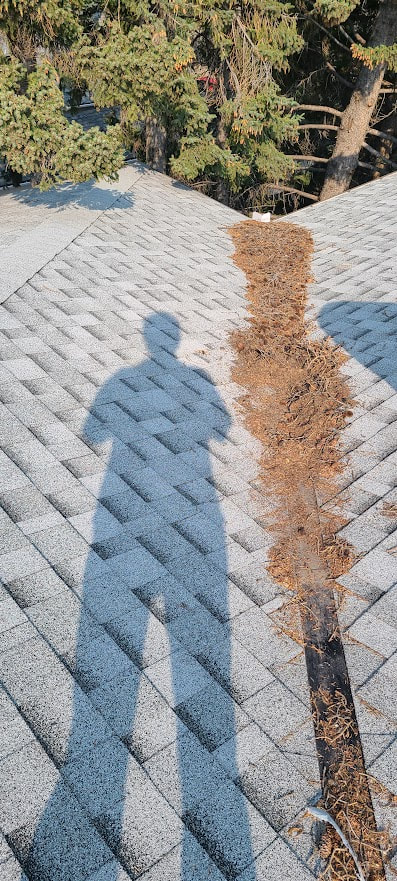
The roof should be looked over, is there anything sticking up, missing or looks out of place. Is there debris on the roof from trees or something else? Are the gutters or downspouts block by leaves, twigs or a possibly tennis ball? We have seen this and it is amazing how well they block a down spout. All of the roofs penetrations need to be inspected to insure the flashings are in good condition. The flashing used to seal the sewer vent with the shingles can be lead, aluminum and plastic or rubber. The top of these pipes are always open and are between two to four inches across, they can be open because the small amount of water they collect will just go into the sewer. The flashing should fit tight to the pipe so that water running down the pipe won’t enter the attic. They need to be check for breaks, cracks or holes where water could leak in.
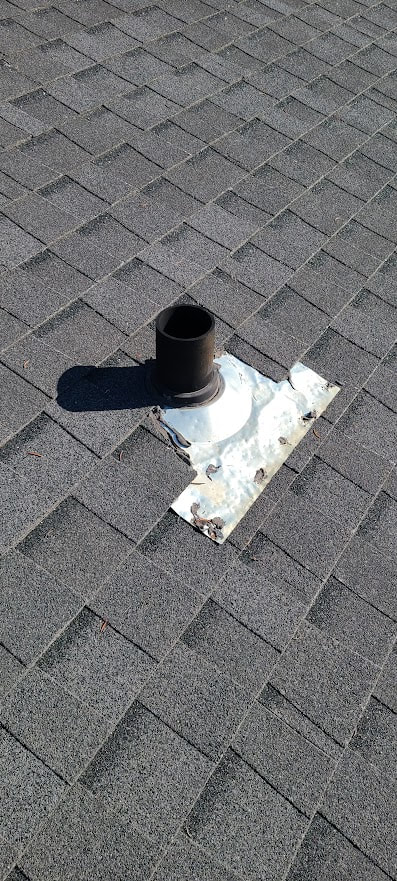 | 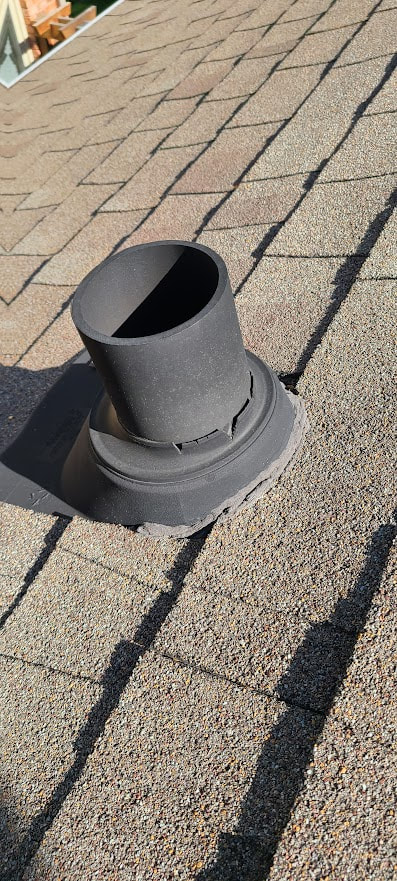 |
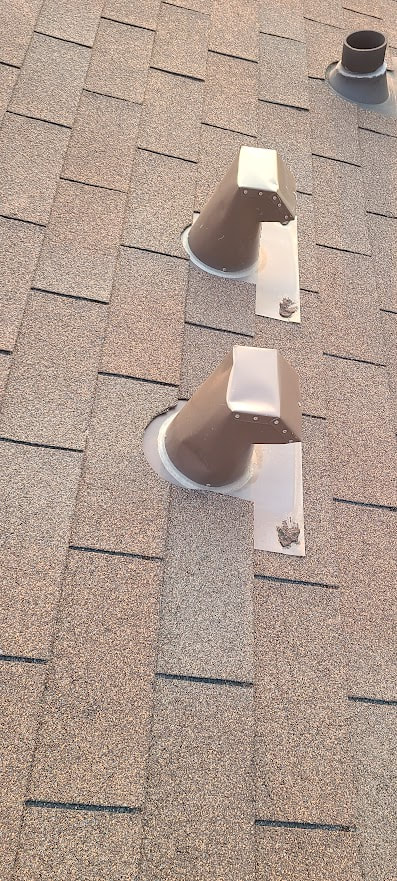
The roof vent for bathroom ceiling fans and clothes dryers can be made of metal or plastic are commonly known as a “gooseneck vent”, this is because the air blow up and due to the shape of the vent it exhaust down toward the roof. With the air coming out the bottom air can exit and water doesn’t leak in. These should be checked for visible damage and a look underneath where the air comes out to insure they are not blocked with lint if they are for a clothes dryer. There should be a screen or damper to prevent bugs and birds from entering when there is no air coming out.
Chimneys from the furnace and possibly a fireplace need to be checked are flashings secured to the roof deck, no corners lifting up? There is a collar that is connected to the chimney pipe just above the roof flashing so that the pipe can move in relation to the roof flashing. This collar is sealed to the chimney with mastic so that water running down the pipe won’t end up on the furnace in the basement. The top of the chimney should have a metal cap to prevent want from getting into the pipe, it need to be check to see if it is loose or has damaged rivets.
Chimneys from the furnace and possibly a fireplace need to be checked are flashings secured to the roof deck, no corners lifting up? There is a collar that is connected to the chimney pipe just above the roof flashing so that the pipe can move in relation to the roof flashing. This collar is sealed to the chimney with mastic so that water running down the pipe won’t end up on the furnace in the basement. The top of the chimney should have a metal cap to prevent want from getting into the pipe, it need to be check to see if it is loose or has damaged rivets.
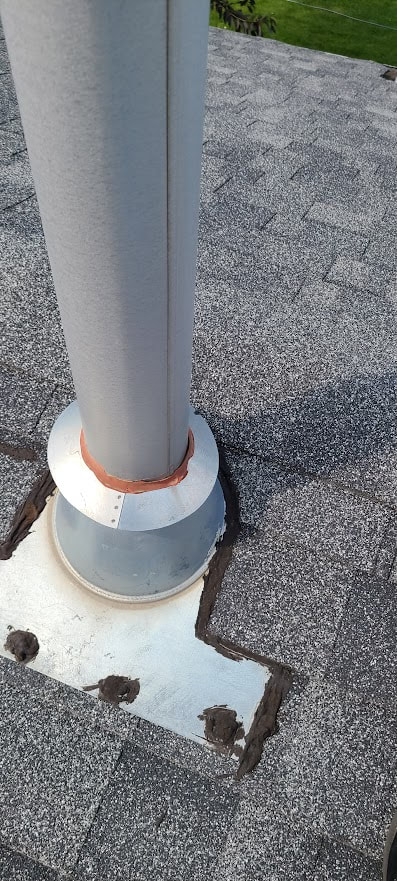
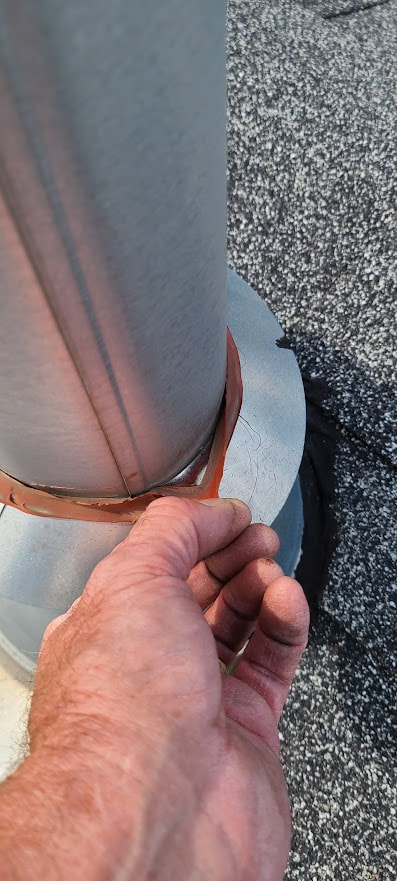
There is metal flashing installed where ever the roof meets a wall, any corners need to have the small joint filled with mastic. Near the top or ridge of the roof there will likely be plastic or metal vents that let warm moist air out of the attic. This helps keep the attic cooler in the summer and dry in the winter. If you don’t see these don’t panic you may have ridge venting or gable wall vents. The vents need to be inspected for holes or cracks due to age or hail.
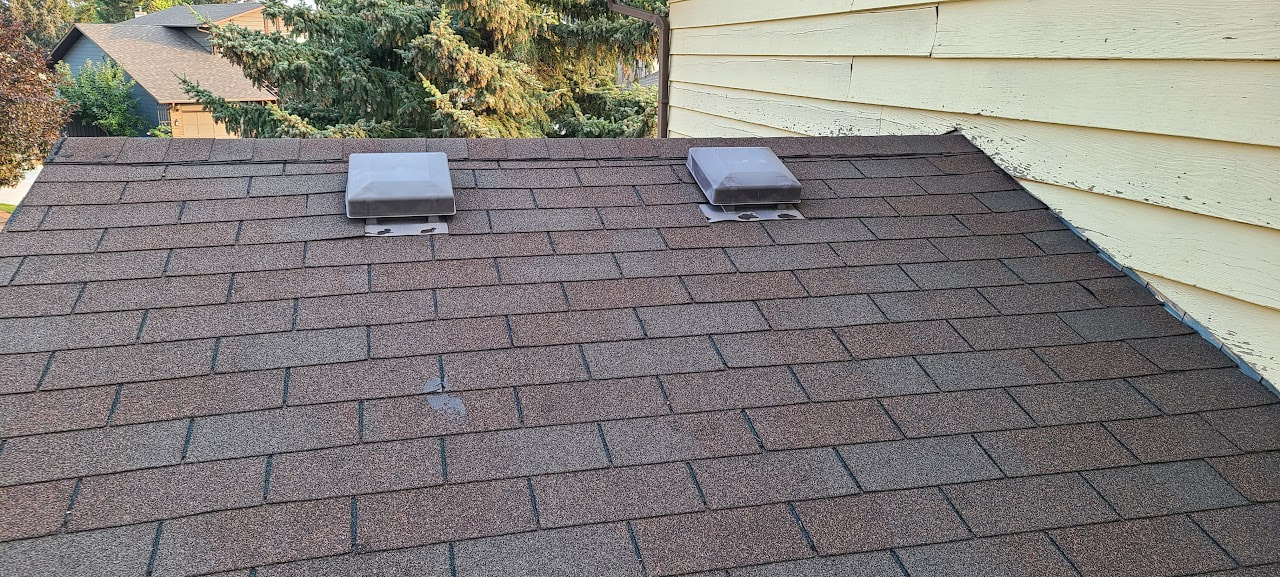
To complete the tune-up any damaged vents will need to be replaced, depending on the condition of the shingles this may or may not be easy. Once all of the nails are removed the vent should slide out and the new one can be installed. Damaged and missing shingles also need to be replaced by carefully removing the nails in them and the row above. Any loose mastic on the face nails of vents and flashings should be removed and replaced. Any debris on the roof and in the gutters needs to be removed to allow water to freely flow off the roof. Once the roof is checked over and cleaned the last part is to insure that the downspout extensions on the ground are in place and taking the water away from the foundation of the house.
Sometimes, very little needs to be done to the roof to insure it is in good condition. With a roof tune-up completed you can sleep soundly during the coming winter storms knowing your home will keep you dry.
As J.F Kennedy said many years ago, “the time to fix the roof is when the sun is shining”.
It’s also cheaper.
Sometimes, very little needs to be done to the roof to insure it is in good condition. With a roof tune-up completed you can sleep soundly during the coming winter storms knowing your home will keep you dry.
As J.F Kennedy said many years ago, “the time to fix the roof is when the sun is shining”.
It’s also cheaper.